


Norway Returns to the World Cup: Analysis of a Historic Qualification
After defeating Estonia 4-1 and then Italy with the same score, Norway secured their ticket to their first World Cup in 27 years. With world-class figures like Erling Haaland and Martin Ødegaard in their ranks, the question that arises is: why did it take them so long to achieve it? Coach Ståle Solbakken, who was a midfielder on the Norway team that participated in the 1998 World Cup, has managed to give the team a new identity. “This generation has the same spirit and grit that we had,” commented Solbakken. “Everyone is eager to meet up with the national team, they believe in the project and care about others. There’s no point in talking about tactics if that team spirit isn’t generated.”- How nations qualify for the 2026 World Cup
- Who would win the 2026 World Cup if it started today?
- Haaland in prolific form: ‘I’ve never felt better’
“Solbakken has built a tremendous culture within the team. They have overcome many criticisms and that has undoubtedly made them stronger.”
Erik Thorstvedt
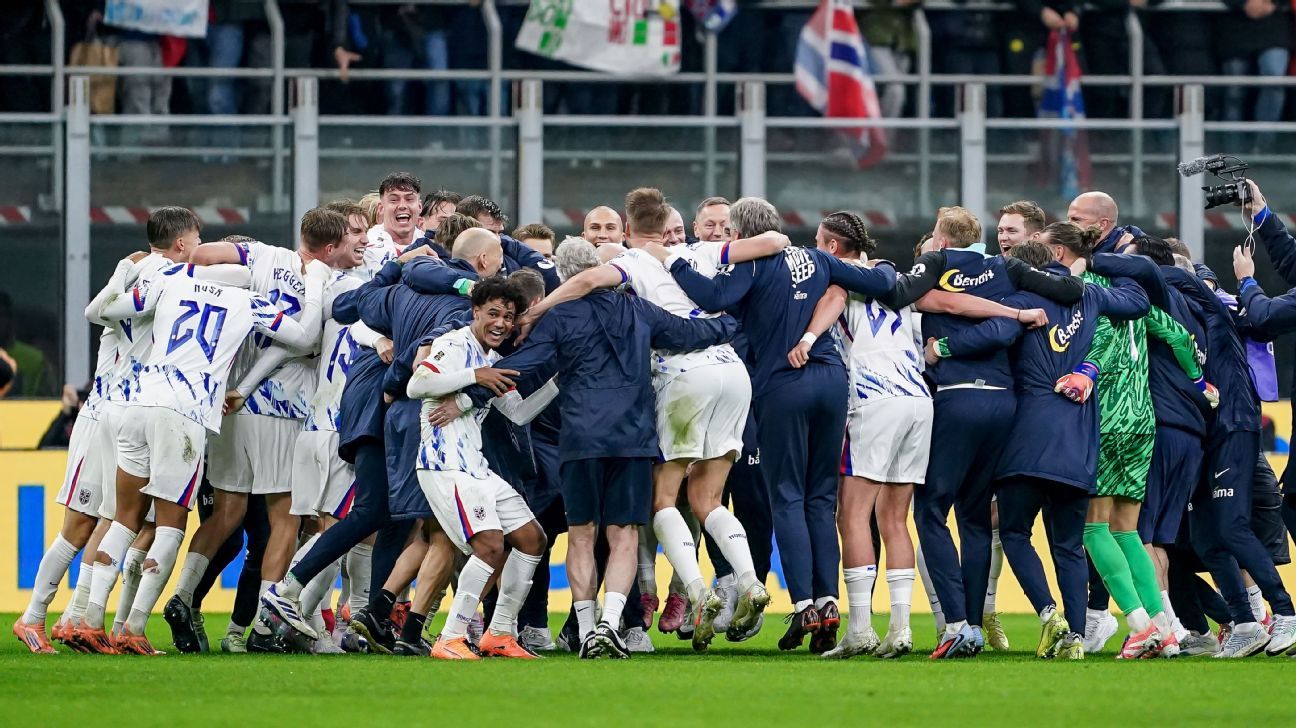
“That was the moment the players finally understood what Solbakken wanted… It felt like something new was happening. We had ‘won’ something. It was a big change; a few weeks earlier, Solbakken had been written off as useless, and many were calling for his head.”
Erik Thorstvedt
Since then, Norway, led by Ødegaard, has won 11 consecutive competitive matches, including victories over Italy and Israel. After the match against Israel, the opposing team’s coach, Ran Ben-Shimon, stated: “I think Norway is one of the two best teams in Europe, along with Spain”.
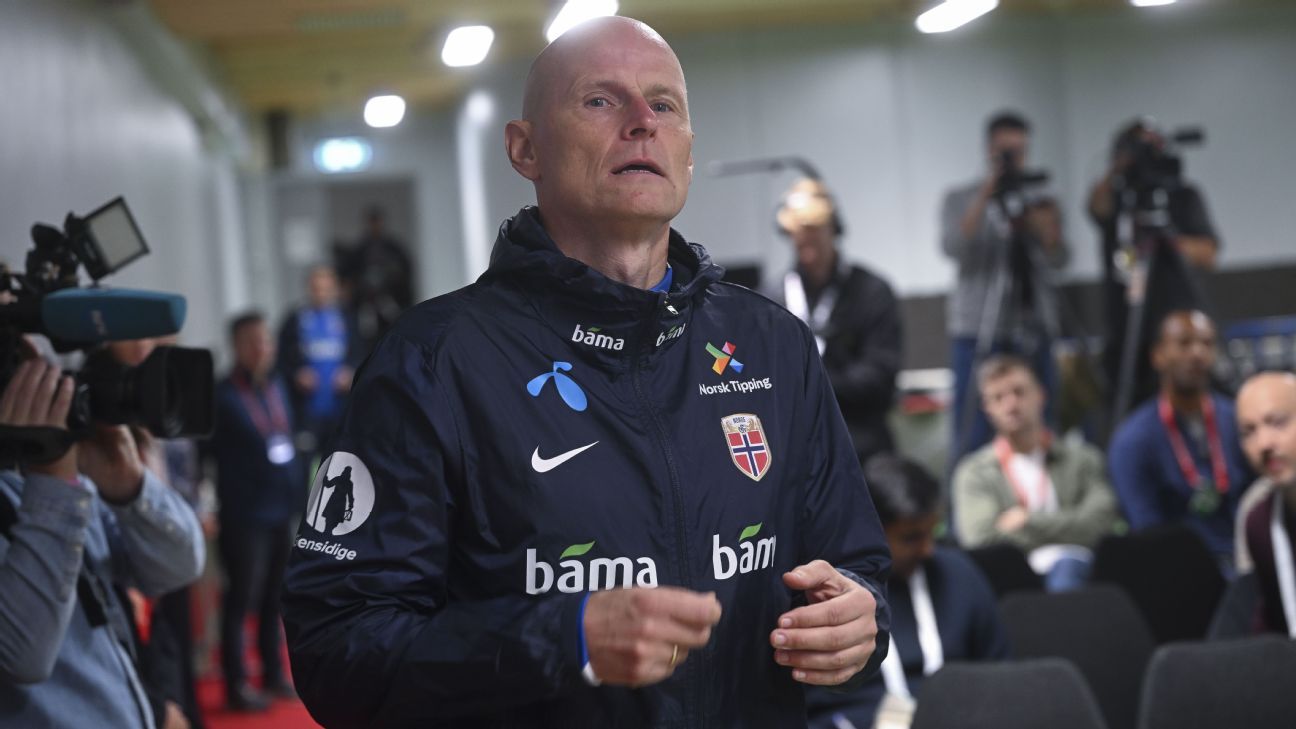
Thorstvedt sees this change as the moment Norway stopped fearing its rivals. Ødegaard’s evolution, the emergence of Antonio Nusa, and Haaland’s goalscoring ability have been crucial. A defining match was against Italy in Oslo, where Norway managed to defend with ball possession, controlling the game and conserving energy to attack. For Solbakken, this symbolizes the transformation of a team that previously panicked under pressure.“The key is that I have been able to work with a group that has felt increasingly comfortable with the way we want to play football. Perhaps I was a bit too ambitious at the beginning, but I realized that with the players available, and those who were coming, we needed to adopt a more offensive style.”
Ståle Solbakken
A Key Tactical Shift
Beyond the individual performance of Haaland and Ødegaard, Solbakken’s biggest advance has been structural. His team attacks more intelligently, going from being reactive to dominating possession. The 4-3-3 / 4-2-3-1 formation, ball circulation to attract the opposition, and bravery in possession are key characteristics.The zonal defense, anchored by Kristoffer Ajer and Torbjørn Heggem, has strengthened the team. The presence of Sander Berge in midfield has also been fundamental. His box-to-box midfielder role complements Ødegaard’s precision, forming a dynamic midfield. Norway’s evolution is reflected in data such as regattas and progressive races. Solbakken acknowledges the influence of Oscar Bobb and Antonio Nusa in this offensive aspect.“Technically, there are some similarities [with 1998], particularly in our zonal defensive organization, at a time when many teams prefer man-to-man systems. I think that gives us an advantage.”
Ståle Solbakken
Haaland: The Example of a Team
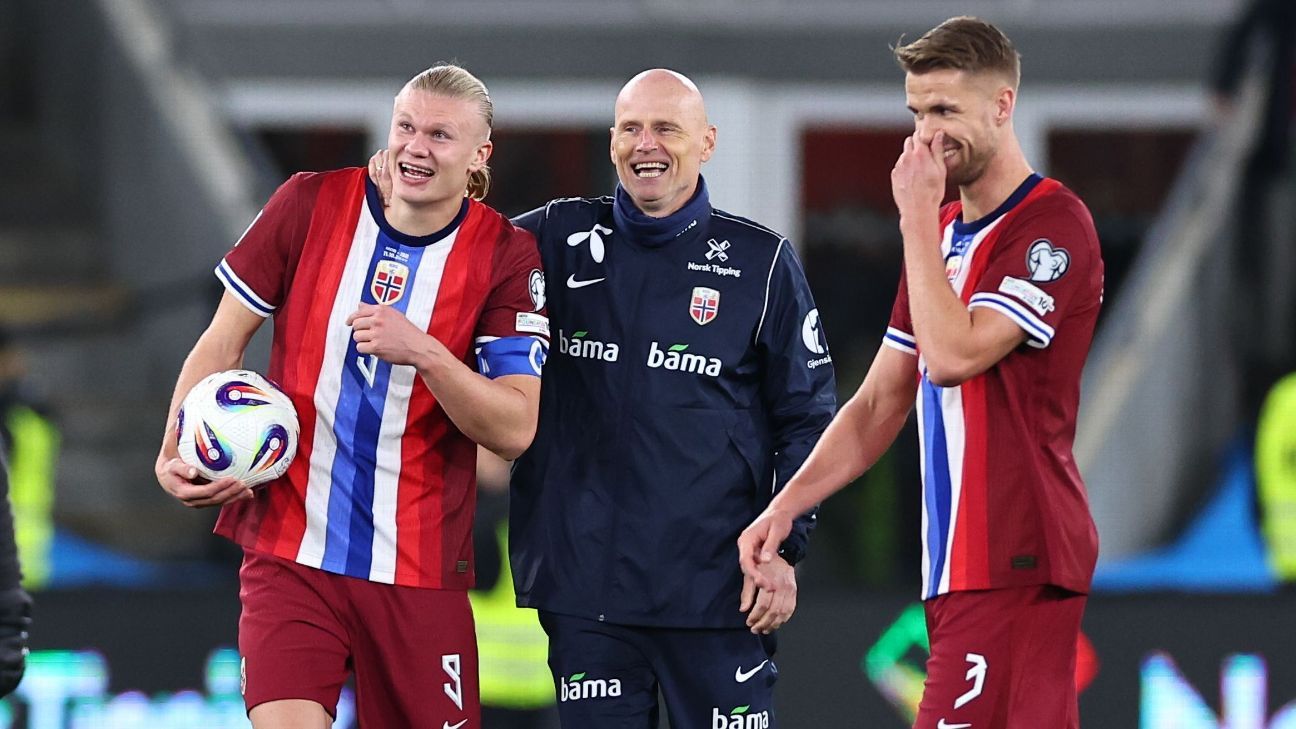
Solbakken highlights the importance of “distances” in the game, which allow Ødegaard to find passes and Haaland to make his runs. The leadership of players like Ødegaard, Haaland, Berge and Alexander Sørloth has been key, creating a different team dynamic.“Solbakken’s role should not be underestimated… He masters both aspects. He is brutally honest and direct with the players.”
Erik Thorstvedt
Norway’s success in the classification has been a long and arduous process, but Solbakken feels a great relief. “When I saw the results of the draw, I was almost sure that Italy would advance. But in the end, we were victorious, and we feel very proud. In this tournament, I set high standards for the players, and they have rewarded me generously. They have done an excellent job.”


