Troop shortages: Ukraine’s critical challenge on the battlefield
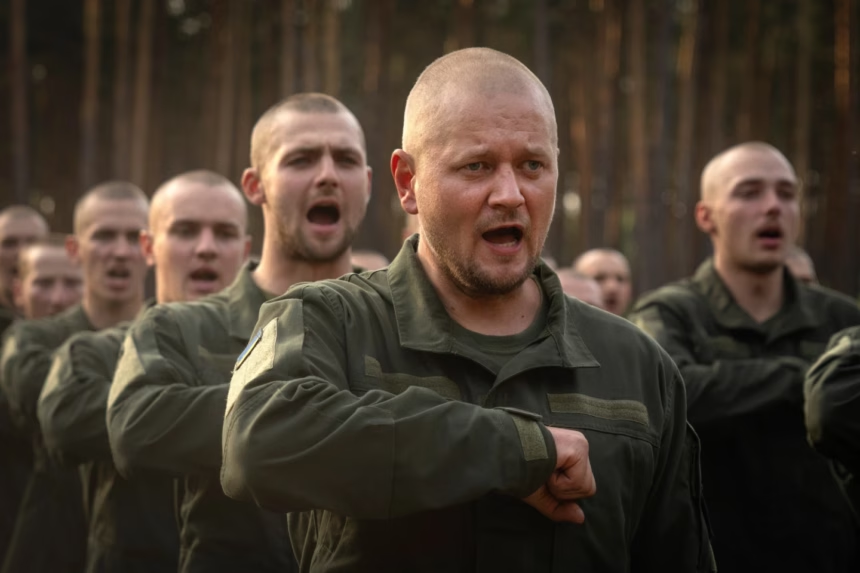
Despite significant technological advances and the implementation of innovative drone tactics, Ukraine faces an obstacle that has threatened its operational capacity since the beginning of the conflict: the lack of military personnel. The numerical inferiority against Russian forces has intensified as the war has dragged on, leaving many units operating at barely half their actual capacity.
Commanders on the ground warn that, with current troop levels, the army is barely managing to hold defensive positions. Any attempt to advance or conduct larger-scale offensive operations carries an unacceptable risk of additional casualties. This situation prevents the high command from capitalizing on the tactical advantages offered by its modern drone units.
Based on the equipment and the number of personnel we have today, we barely have enough to maintain the sector we currently control. Moving forward would inevitably imply greater losses.
Subcommander of the Da Vinci Wolves battalion
Factors aggravating the staffing crisis
- Extreme exhaustion: The lack of troops prevents frequent unit rotation, which accelerates the physical and psychological wear of the soldiers.
- Mobilization deficiencies: Persistent problems with desertion and draft evasion have hindered the creation of strategic reserves.
- Demographic challenges: Ukraine has a reduced recruitment base due to mass migration and an aging population, complicating the replacement of casualties.
- Lack of incentives: After years of combat, the country struggles to motivate new recruits to join the infantry ranks, despite government attempts to improve salaries and contractual conditions.
Reorganization and future of military strategy
The Ukrainian Ministry of Defense, under the leadership of Yevhenii Khmara, seeks to implement a deep restructuring. The plan consists of prioritizing the creation of smaller but highly efficient units, consolidating the best-performing formations, and dissolving those that show operational weaknesses. However, analysts point out that these reforms require time and a clearer mobilization policy that manages to convince citizens fit for service.
Meanwhile, the war continues in a precarious balance. Although the Ukrainian army has managed to execute limited operations and recover small portions of territory in places like Lyman, the lack of reserve forces prevents a fundamental change on the 1,250-kilometer front. Experts agree that, without an effective solution to the personnel shortage, the defensive line will remain static, limiting the ability to respond to the constant pressures of the Russian offensive.