Tension in France: LDH denounces threats to press freedom following Jordan Bardella controversy
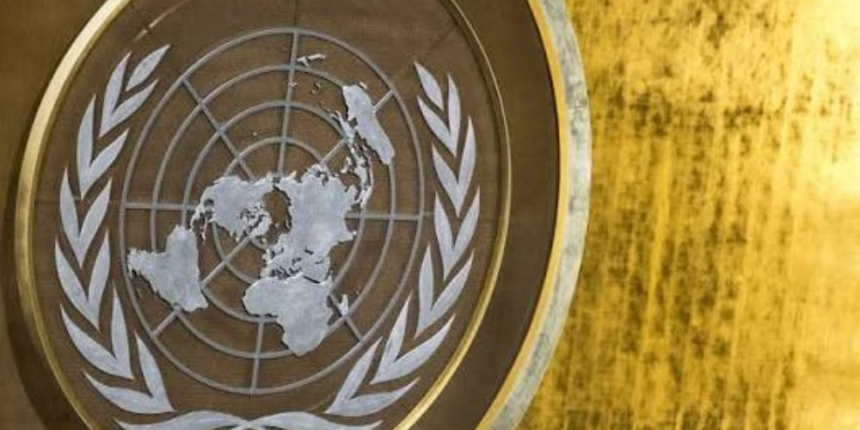
The Human Rights League (LDH) in France has taken a firm stance in the face of the recent climate of political confrontation, announcing that it will bring a formal complaint before the United Nations. The organization seeks to raise awareness about what it classifies as a series of direct threats against the practice of journalism and freedom of the press in the European country.
This conflict arises from the reaction of National Rally (RN) leaders to a journalistic investigation linking its president, Jordan Bardella, to alleged antisemitic messages sent a decade ago.
The origin of the controversy
The controversy erupted when an investigation was released analyzing messages attributed to Bardella during his youth, when he was a member of what was then called the National Front. Faced with these accusations, the political leader has categorically denied the veracity of the writings, labeling them as crude fabrications and confirming that he will take legal action for defamation.
Bardella formally denies being the author of the 2013 messages and maintains that they are forgeries, holding a stance of legal confrontation against those who have disseminated this information.
Intimidation and freedom of expression
One of the critical points that motivated the LDH’s intervention was Marine Le Pen’s response to the media outlet responsible for the publication. According to the organization, the leader’s statements, which included an allusion to a Kevlar suit, represent an unacceptable form of intimidation toward the press.
- The LDH considers that references to bulletproof equipment put the safety of communication professionals at risk.
- The organization plans to request the intervention of international UN mechanisms to evaluate possible violations of global freedom of expression standards.
- The debate has also reopened internal discussions regarding the RN’s political trajectory and its handling of accusations of antisemitism.
While the political party seeks to distance itself from its past positions, the LDH insists that the tactics used to silence journalistic investigations undermine democratic pillars. The veracity of the messages remains the epicenter of a legal clash that promises to extend over the coming months.