
The Dominican Republic’s 9-1-1 System modernizes with artificial intelligence and drones
The 9-1-1 National Emergency and Security Response System has taken a giant step toward technological modernization. During the recent presentation of The Weekly Agenda, led by President Luis Abinader, the new capabilities that will transform the management of responses to critical situations in the country were unveiled.
The integration of cutting-edge tools seeks to optimize every second in citizen care. Now, a 9-1-1 call activates an automated ecosystem that combines high-precision geolocation, rapid routing systems, and the immediate deployment of first-response drones, known as VAPRE-M2. These devices allow for the transmission of real-time visual information from the scene of the incident, even before ground units arrive at the destination.
Technological innovation at the service of security
Strengthening the system is not limited solely to aerial surveillance. The infrastructure has been bolstered with:
- Advanced urban video surveillance.
- Artificial intelligence tools powered by NVIDIA infrastructure to streamline decision-making.
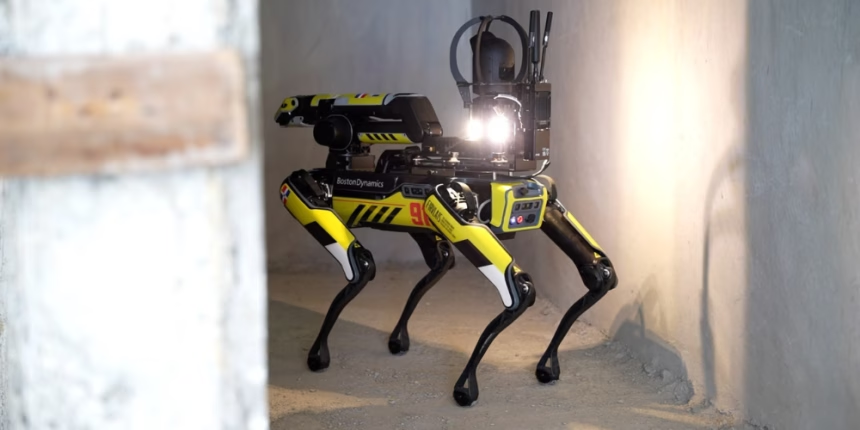
- Robotic platforms developed in conjunction with Boston Dynamics, designed to operate in high-risk scenarios, thereby protecting the physical integrity of response personnel.
With the implementation of these technologies applied to emergencies, the Dominican Republic positions itself as the fourth country in the Americas to adopt this level of innovation, joining the United States, Canada, and Brazil.
The fundamental objective of this update is to create a unified ecosystem where citizens, response agencies, and technology converge. In this way, 9-1-1 not only receives the alert, but also allows for locating, visualizing, analyzing, and coordinating much more informed and efficient assistance from the first contact, marking a turning point in national public safety.