Week 13 is already history in the NFL, and what a week it was full of action! There were shoves and struggles, as the commentators would say, in the games between Patriots and Giants, Jaguars and Titans, and Steelers and Bills. As the weather cools and playoff hopes diminish, skirmishes begin. If any of you mess with my editors, I will come with bad intentions. Every Tuesday, we’ll break down the previous week’s NFL action, examining the biggest stories and what’s next. We’ll look for measured reactions to everyone’s exaggerations, celebrate the exciting that no one appreciates, and highlight what you might have missed. There will be play analysis, statistics, and lots of fun.
The Big Thing: Panic Meter for Five Teams
Each week, this column will begin with a broad look at a key game, player, or trend from the NFL action. What does it mean for the rest of the season? This week, we analyze five playoff contenders to assess how nervous they should be about recent stumbles.
Pittsburgh Steelers
Panic Meter: DEFCON 1,000,000 (Yes, I understand that larger DEFCON numbers are actually less severe. “DEFCON 1” just doesn’t sound as good.) The Steelers’ 2025 offseason didn’t work. They pursued Aaron Rodgers with the belief that the 41-year-old quarterback had another year of championship-caliber play in him, and he clearly doesn’t. They traded safety Minkah Fitzpatrick for Jalen Ramsey with the belief that Ramsey could still play cornerback and give them unprecedented versatility in the defensive backfield, and he couldn’t and hasn’t. They extended T.J. Watt with the belief that the 30-year-old linebacker’s game would age well, and it hasn’t. They traded George Pickens for DK Metcalf with the belief that Pickens’ behavioral headaches weren’t worth his production as a receiver, which they could cover with Metcalf, and they were wrong.It’s absurd to say we all saw this coming, but in general, we did. Watt’s explosiveness diminished throughout the 2024 season before his injury and has fallen again this year. His get-off was 0.75 seconds in 2022, then 0.79 in 2023, 0.83 in 2024, and now 0.87 in 2025. That full tenth of a second matters for a speed rusher like Watt, who has delivered a pressure rate below 10% in each of the last two seasons.
With a deep and young group of edge rushers behind him, the Steelers were well-positioned to go out a year earlier instead of a year later. But moving away from Watt didn’t fit their timeline, so he was extended with a contract of $41 million annually, higher than the average annual value of Myles Garrett’s contract. Garrett has 19 sacks this season; Watt has seven. Watt is no longer an elite player, and with Ramsey relegated to safety to hide his declining athleticism, there are no top-tier players left on Pittsburgh’s defense. Due to all the veteran contracts, the Steelers’ defense is second in salary cap spending, but 20th in success rate. The team’s lack of speed also kills them in the explosive play rate; they are 26th in giving up explosive passes and explosive runs. There are also schematic frustrations, as the Steelers’ run defense is a farce of errors along the defensive line and at linebacker. Buffalo ran for 249 yards against Pittsburgh on Sunday in the absence of first-round defensive tackle Derrick Harmon (knee); it was the most rushing yards given up by the Steelers at home since 1975. They also can’t play too much zone coverage; it’s difficult to hide those linebackers. Offensive problems are similar but isolated on one player: Rodgers. There’s no two ways about it, Rodgers is one of the worst starting quarterbacks in the league. He can’t drive the ball, but he hates throwing interceptable balls, so he throws passes at the edge of his receivers’ range. He also hates getting hit, so he gets rid of the ball faster than almost any other passer, which negates his post-play elite processing. Once the premier magician for extending plays and throwing on the move, Rodgers is now one of the worst QBs on dropbacks of more than 2.5 seconds. Only Cam Ward, Joe Flacco, and Jaxson Dart have worse success rates on such plays. Planning the game for Rodgers and the Steelers is extremely easy. The best cornerbacks travel with Metcalf (Christian Benford did it this week, and DJ Turner II did it two weeks before) and press him at the line, disrupting the playing time of Rodgers’ main target. Rodgers will throw a prayer to a disappointing option on the field (Calvin Austin III, Roman Wilson) or will go to the running backs Jaylen Warren and Kenneth Gainwell. If he’s lucky, it will be tight end Darnell Washington. A few times per game, one of those athletes after the reception will get a big gain. Warren is fast and hard to tackle; Washington is huge and hard to tackle. Surprisingly, 66.4% of Rodgers’ passing yards have come after the reception, which is surpassed only by A.J. Feeley in 2011 in the last 15 years. That’s 713 sample quarterback seasons! This is completely unsustainable. Rodgers’ 5.7 air yards per attempt are 703rd of those 713 seasons; his minus 3.5 air yards to the sticks are 705th. Rodgers can’t and won’t throw the deep ball and yet remains in complete control of the offense at the line of scrimmage and regularly pulls out of runs and goes into passes. The passing game is completely inadequate. This, like every other aspect of the Steelers’ season, was predictable.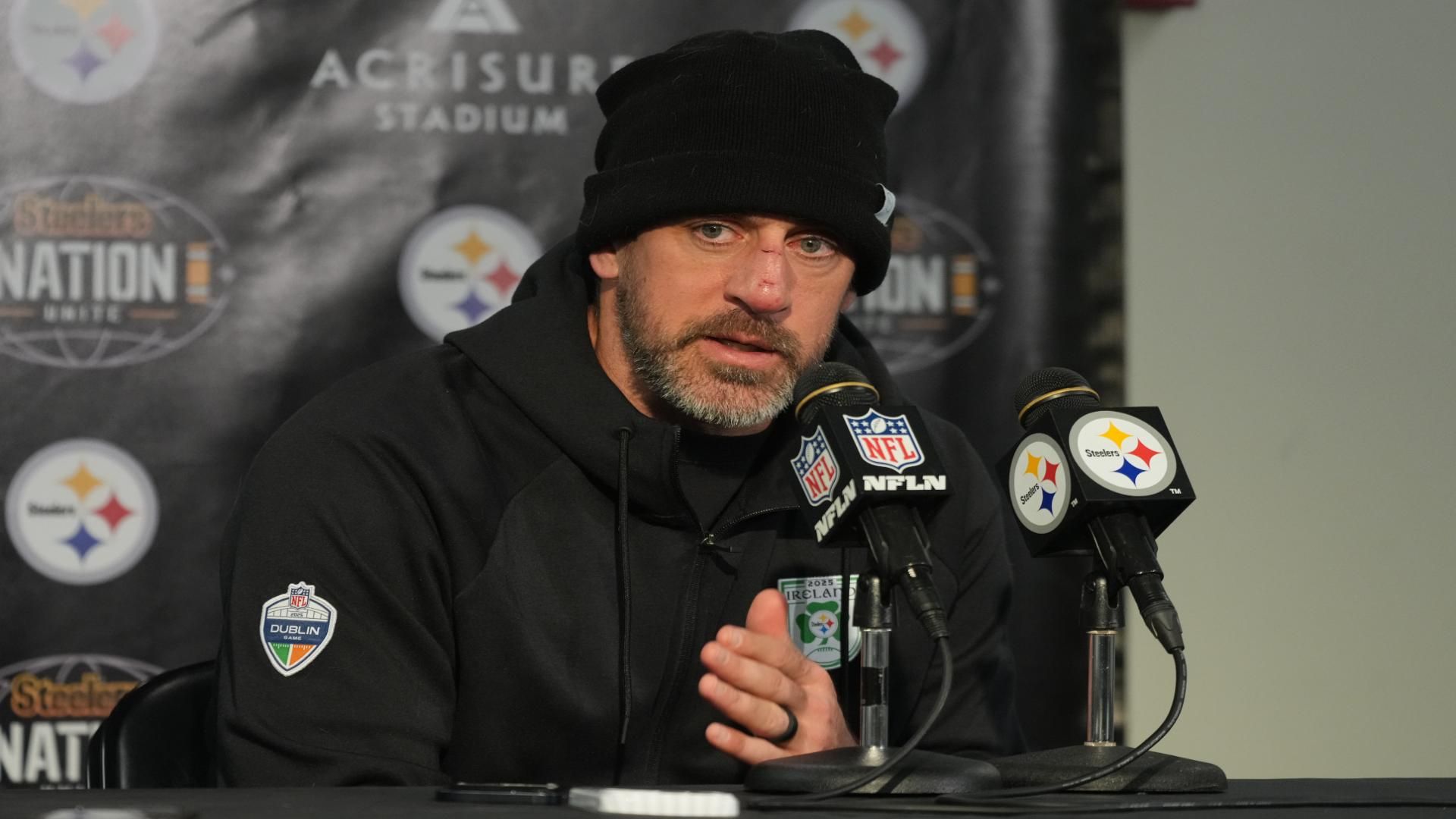
Detroit Lions
Panic meter: It’s the beginning of the end I can explain the Lions’ recent defeats quite easily. The Lions went 0 for 3 on fourth down in their Thanksgiving loss, while the Packers went 2 for 2 (with some referee help to boot!). In the loss in Philadelphia, the Lions went 0 for 5 on fourth down. In the loss to J.J. McCarthy (the Lions really lost to J.J. McCarthy) and the Vikings, they went 1 for 3 in the red zone, and the Vikings got 17 points from three short fields. The Lions have been losing in high-pressure moments lately. But those are the types of moments where losses turn into wins if one small thing goes another way. I trust Dan Campbell and a veteran Lions team to endure that valley and emerge on the other side a little luckier. That being said, the Lions have a 7-5 record, and that’s a reason for panic. The home-field advantage is a big deal for Detroit because of their quarterback. Jared Goff, a California native with small hands, doesn’t play well in cold weather under the stars. Throughout his career, Goff has a 68.2% completion percentage indoors, but that drops to 57.4% when playing outdoors in temperatures below 50 degrees. His touchdown-to-interception ratio drops from 3.5 to 1.8, and his dropback success rate falls from 49.8% to 40.5%. Lions fans don’t like it when I reference this statistic because Goff has been better during his tenure with the Lions when playing outdoors and in the cold relative to his performance with the Rams. This is only slightly true. He has a 42.7% success rate with the Lions in those locations, versus 39.2% with the Rams. He has a 60.3% completion percentage with the Lions, versus 54.8% with the Rams. He’s been a little better, but the problem was still clear and obvious against the Eagles on “Sunday Night” in Week 11. His ball grip fails and his accuracy plummets. The Lions have played all but one of their recent playoff games at home, and the only away game was in sunny Santa Clara, California. With only an 8% chance of winning their division, according to ESPN’s Football Power Index projections, the Lions will likely have to travel during the postseason. Green Bay, Chicago, Philadelphia, and even Seattle are outdoor stadiums in cold climates. This is a brutal draw for Goff’s particular weaknesses. It doesn’t stop there. Goff’s other major weakness, his lack of ability to escape the pocket, has been hit lately. The Lions’ interior offensive line is noticeably worse this season than it was in Goff’s previous seasons. Rookie right guard Tate Ratledge has replaced Kevin Zeitler with average play, while Graham Glasgow has failed to fill Frank Ragnow’s big shoes at center. The Lions tried to get Ragnow back, but he didn’t pass his physical. Left guard Christian Mahogany fell for the season with an injury, and Kayode Awosika has struggled in relief. Poor interior protection is a problem for all quarterbacks, but it’s doubly detrimental to a quarterback who lacks mobility. Goff has to hang in the pocket and, as such, is getting hit, a lot. In fact, Goff has been hit on 20.2% of his dropbacks, easily the highest of his tenure with the Lions. He’s only below his disastrous rookie season of 2016 before Sean McVay arrived in Los Angeles to rescue his career. Those hits add up on Goff, who deserves credit for his toughness! But he’s not Matthew Stafford or Josh Allen. He’s not built to sustain this level of damage, and his internal clock will speed up on long and late downs when he sees blitz looks. The Lions’ offensive line was one of the best in the league in Goff’s early years in Detroit, but those days are gone. In addition to the drain of interior talent, left tackle Taylor Decker is also showing signs of his age. Without an elite run block, Detroit faces more third and longs. Without elite pass protection, Goff struggles more on those downs. The offense loses an edge. It’s not a bad unit, but it’s no longer elite. The defense is also having problems. Under new defensive coordinator Kelvin Sheppard, the Lions remain committed to playing man-to-man coverage at above-average rates and on high-pressure downs. The Lions have run man-to-man coverage on 44.6% of their defensive plays, easily the most in the league. On late downs, they are at 68.7% (again, the most). In the red zone, they are at 69.0% (the third most).Being predictable is never good. The Packers shredded the Lions on late downs and in the red zone with concepts that beat man coverage, and the Lions’ inability to pass rub routes created easy touchdowns for Matt LaFleur and Jordan Love. But the problem isn’t just schematic; it’s also personnel. As much as the Lions like the disposition and leadership of cornerback Amik Robertson, he struggles with size and speed, as evidenced by Christian Watson’s long touchdown last Thursday. And Detroit invested a 2024 first-round pick in Terrion Arnold in the hope that he would be a shutdown CB1, and he simply hasn’t been. Now he’s on the bench with season-ending shoulder surgery, and the depth behind Robertson and D.J. Reed will be tested.
Detroit doesn’t have the personnel to execute the coverages it wants to run. Safety Kerby Joseph will eventually return from his knee injury, and the Lions are still fourth in success rate when playing man-to-man coverage. But playoff opponents will have deep receiving corps (as was the case with the Packers), aggressive quarterbacks, and precise play-calling. It’s difficult for Detroit to pivot to playing zone, as its base packages put too many linebackers on the field. The Lions need to live in this volatile defensive form, but I’m not sure their cornerbacks have three dominant games against the Packers, Seahawks, and Rams in them. It’s not fair to say the Lions’ window has closed. The same players who created the window (Goff, running back Jahmyr Gibbs, left tackle Penei Sewell, receiver Amon-Ra St. Brown, edge rusher Aidan Hutchinson, defensive tackle Alim McNeill, and Joseph) are still there. But the Lions’ window is officially transitioning from a cheap roster to an expensive one, and the increasingly thin margins are evident. General manager Brad Holmes needs to hit on players in these next two drafts (pass rusher, interior offensive line, cornerback) to keep the ship afloat as it is currently built. Otherwise, a soft roster reset will be required.Indianapolis Colts
Panic meter: One week from total madness The Colts are on the brink. Let’s rewind the clock a month. It’s Sunday, November 2nd. The Colts have just suffered their second loss 27-20 to the Steelers in Pittsburgh. It was a ridiculous game. The Colts’ offense moved the ball at will, but turned the ball over five times (and the special teams contributed a sixth turnover). Like most teams that turn the ball over six times, the Colts lost. Nothing to worry about. Nothing to see here. Two days after the trade deadline, General Manager Chris Ballard traded two first-round picks and wide receiver Adonai Mitchell to the Jets for cornerback Sauce Gardner. Absolutely! The AFC is attainable. The Colts had found the next Baker Mayfield in Daniel Jones, who looks like a renewed man in Shane Steichen’s offense. After an unusually aggressive offseason of free agent acquisitions (Charvarius Ward, Cam Bynum), why not make a total trade and attack the opportunity this season? Sure, the price is high. Sure, this almost completely locks them into Jones as their QB for the next three years. But a Lombardi Trophy is in sight. Since that day, the Colts have a 1-2 record, with only one overtime victory against the Falcons in their pocket. The clock has struck midnight for Jones, who has seen his game under pressure totally regress to his Giants days. A fibula fracture during practice before the Week 12 game against the Chiefs certainly hasn’t helped. But the Colts’ offensive line, which was elite during the first half of the season, has hit rock bottom. The top edge rusher duos in Pittsburgh, Atlanta, and Houston have had success working through Indianapolis’ tackle pair, Bernhard Raimann and Braden Smith. Center Tanor Bortolini, an asset in the running game, is also being exposed in pass protection. The Colts are also feeling the heat from their AFC South rivals. When Ballard made the trade for Gardner, the Colts had a 3 1/2-game lead over the two-time defending AFC South champions, the Texans, who had a 3-5 record. Houston has since won four straight games, including their Week 13 victory over the Colts, to reach 7-5. They are just one game behind Indianapolis and currently hold the tiebreaker. Similarly, the Jaguars had a 5-3 record at the time of the trade, 1 1/2 games behind the Colts. Jacksonville has gone 3-1, losing only to the Texans, and now shares the same 8-4 record as Indianapolis, with their first head-to-head game approaching.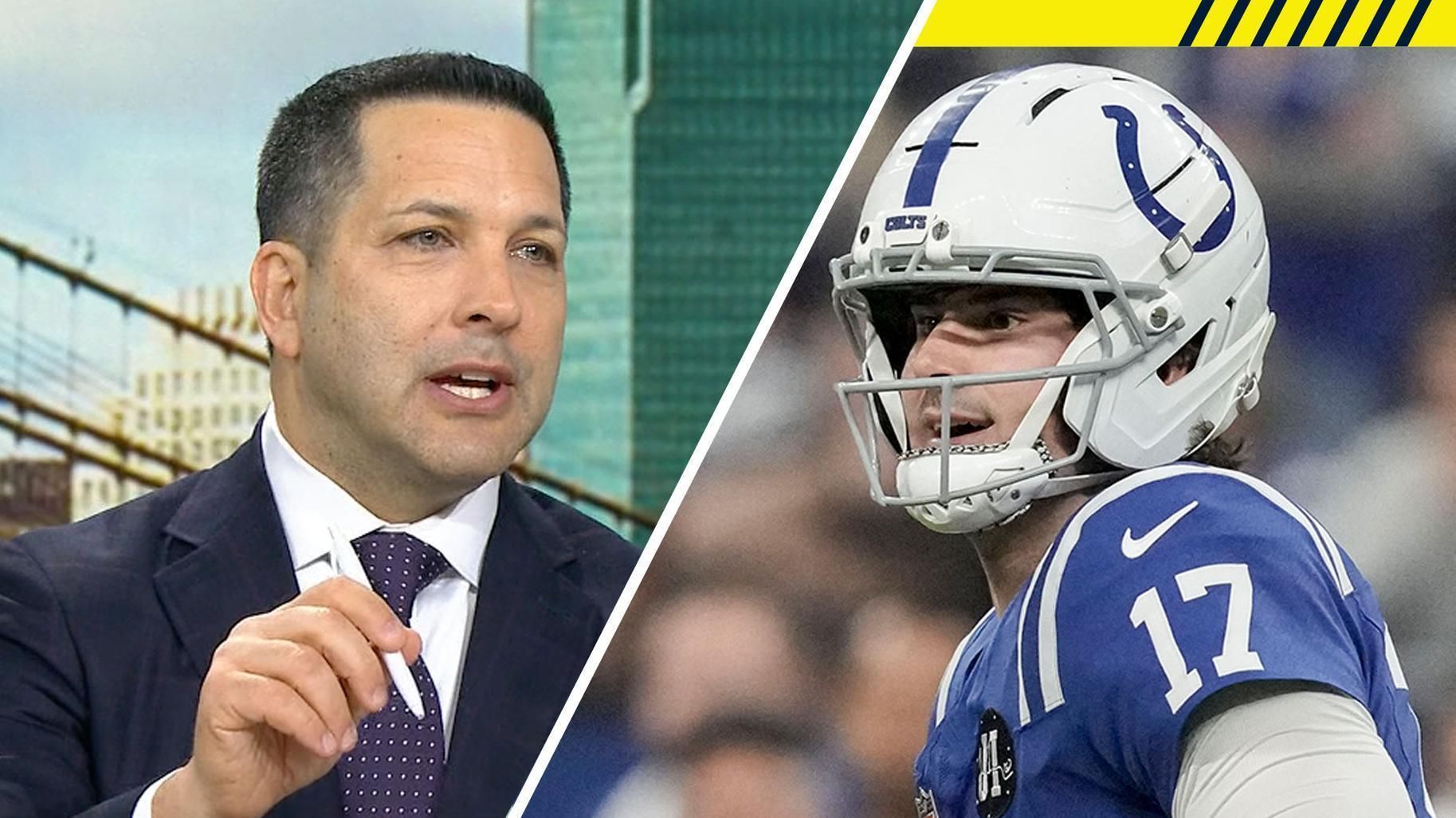
Just a nightmare of rolling the dice right after the Colts gave it their all. A quarterback injury, two divisional rivals at their best and a couple of close losses, and the cherry on top is Gardner out for several weeks due to a calf strain. He won’t go on injured reserve (there’s little point at this point in the season), but the hope is that he’ll return during the regular season. That is to say: it’s not guaranteed.
When teams reach true contender status without elite quarterbacks, their foundation tends to be very fragile. So much has come together for these teams to excel with an imperfect quarterback that if any joint in the house of cards moves, the whole operation falls apart. We can see this in Philadelphia, which collapsed in 2023, excelled in 2024, and is on the verge of collapse again in 2025. Think about how quickly the 2024 Vikings crumbled under Sam Darnold, or even the 2024 Lions with Jared Goff, or the injury-riddled 2025 Buccaneers with September’s MVP, Baker Mayfield. When it’s good, it’s good. When it’s bad, it’s bad.
The good news for the Colts is that they built a big cushion. Their 7-2 start has insulated them during this slump to the point that they are still tied for first place with the Jaguars. Jacksonville is far from a perfect team, and even in their recent surge, they have managed overtime wins over the Raiders and Cardinals. The Jaguars are attainable. While the Colts were never going to maintain their historic early-season scoring pace, the inevitable regression doesn’t completely erase the ceiling. The Colts’ offense has been better than any other offense in the AFC for a large part of this season. They also haven’t had any major injury absences on that side of the ball, only Jones is hampered. It’s reasonable to expect the Colts’ offense to return to a respectable level. I still trust it more than the offenses of Denver, Baltimore, Houston, and Jacksonville. But that belief has a shelf life of a week. Fight against Jacksonville’s defense, a complex group with a red-hot pass rusher in Josh Hines-Allen, and the division could completely get out of reach. Offense is only half the battle. The Colts’ defense needs to make a winning effort without Gardner and DeForest Buckner, who is still on the injured reserve due to a neck injury. Loses to the Jaguars, and the Gardner trade could eventually go down as one of the worst mid-season trades in NFL history. Beat the Jaguars, and the snowball stops rolling down the mountain just before it becomes an avalanche. No big bets or anything!