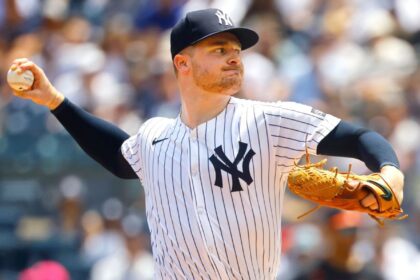
Is MLB on its way to disaster?
On December 1, 2026, at 11:59 p.m. ET, the current Major League Baseball (MLB) collective bargaining agreement expires. This crucial deadline highlights the urgency of negotiations between owners and players, who must reach a consensus to avoid a possible work stoppage in the sport. Negotiations between both parties could result in an agreement before the December 2026 deadline, but history suggests caution. The possibility of the league imposing a lockout on December 1, 2026, is high, which would halt free agency and trades, as happened in 2021. The unofficial but crucial deadline to avoid regular season game losses would be between early and mid-March 2027. A determining factor in this scenario is the owners’ insistence on modifying the league’s economic system, including a salary cap. However, the players’ leaders have made it clear that they will not even consider that possibility. In parallel, the players’ union and its executive director, Tony Clark, are in the midst of a federal investigation into the finances of the MLBPA, initiated around May 2025. Any legal action by the government could influence union leadership and, consequently, negotiations.Timeline of Negotiations
Although a preliminary meeting was held this fall and more informal encounters could arise in the coming months, negotiations usually intensify during spring training. At that time, both parties will present their priorities, which will allow for a better understanding of the central issues of the negotiations. The league’s firmness in its desire for a salary cap will be a key point. Initial proposals are important for establishing the general lines of negotiations. However, the most important meetings will take place near the deadline of December 1, 2026, with November being the crucial month for defining positions before the possible lockout.Key Figures in the Negotiations
From the players:
- Bruce Meyer, Deputy Executive Director, as lead negotiator.
- Tony Clark, the top authority.
- Executive board of players composed of 38 members, including eight elected high-ranking members and a representative from each team.
From the league:
- Dan Halem, deputy commissioner, as lead negotiator.
- Rob Manfred, the top authority.
- League’s labor policy committee, headed by Dick Monfort (Colorado Rockies), along with other owners.
Impact on free agency
Executives, league officials, and agents agree on uncertainty about how spending will develop in the offseason. There are no clear predictions about the course of the offseason, and the few initial signings haven’t given many clues. However, two predominant trends are observed. The usual contending teams like the Yankees, Phillies, and Dodgers, now joined by the Blue Jays, continue with their operations. The Phillies have confirmed that they will proceed as normal, without worrying about the last year of the labor agreement. The Dodgers intend to achieve a rare three-peat in 2026. Other organizations might wait to have more certainty, possibly in the form of a new economic system, before increasing their spending. This could happen after the signing of the next agreement, which means that the end of the current labor agreement will influence the off-season, even if in a limited way. Jed Hoyer, Cubs president, admitted that many of his players’ contracts were designed to expire after 2026, when the labor agreement ends, with the aim of having a clearer financial situation from 2027. Several agents and teams believe that certainty in costs, in the form of a new agreement and, if MLB has its way, a salary cap, will boost spending to higher levels, as teams will better understand their annual costs after a new agreement. Meanwhile, in 2026, a postseason and the World Series will be played. Important markets are not the only ones looking to have a playoff run before things change, according to internal sources. Therefore, free agents are expected to perform well in the market, even with labor concerns. Some might accept one-year contracts, hoping that the next economic system will benefit them when they return to the market, but there will surely be a lot of momentum. Scott Boras, agent, summed up the situation when asked if spending would be reduced this winter, knowing what comes after next season.Historically we haven’t seen that, because teams always want to be the best. The conclusion is that teams understand they don’t have to pay players when there are strikes [or lockouts].
Scott Boras