Driveline: The Lab Revolutionizing Baseball and Seeking Revenge for Hitters
In the Driveline player development center, located in Scottsdale, Arizona, there is a space of over 1,300 square meters where the art and science of baseball merge. On one of its walls, 16 broken bats hang like trophies, symbols of the intensity and effort required for success in the era of pitcher dominance. Driveline, recognized for its innovative approach, now seeks to empower hitters to counter the growing advantage of pitchers.
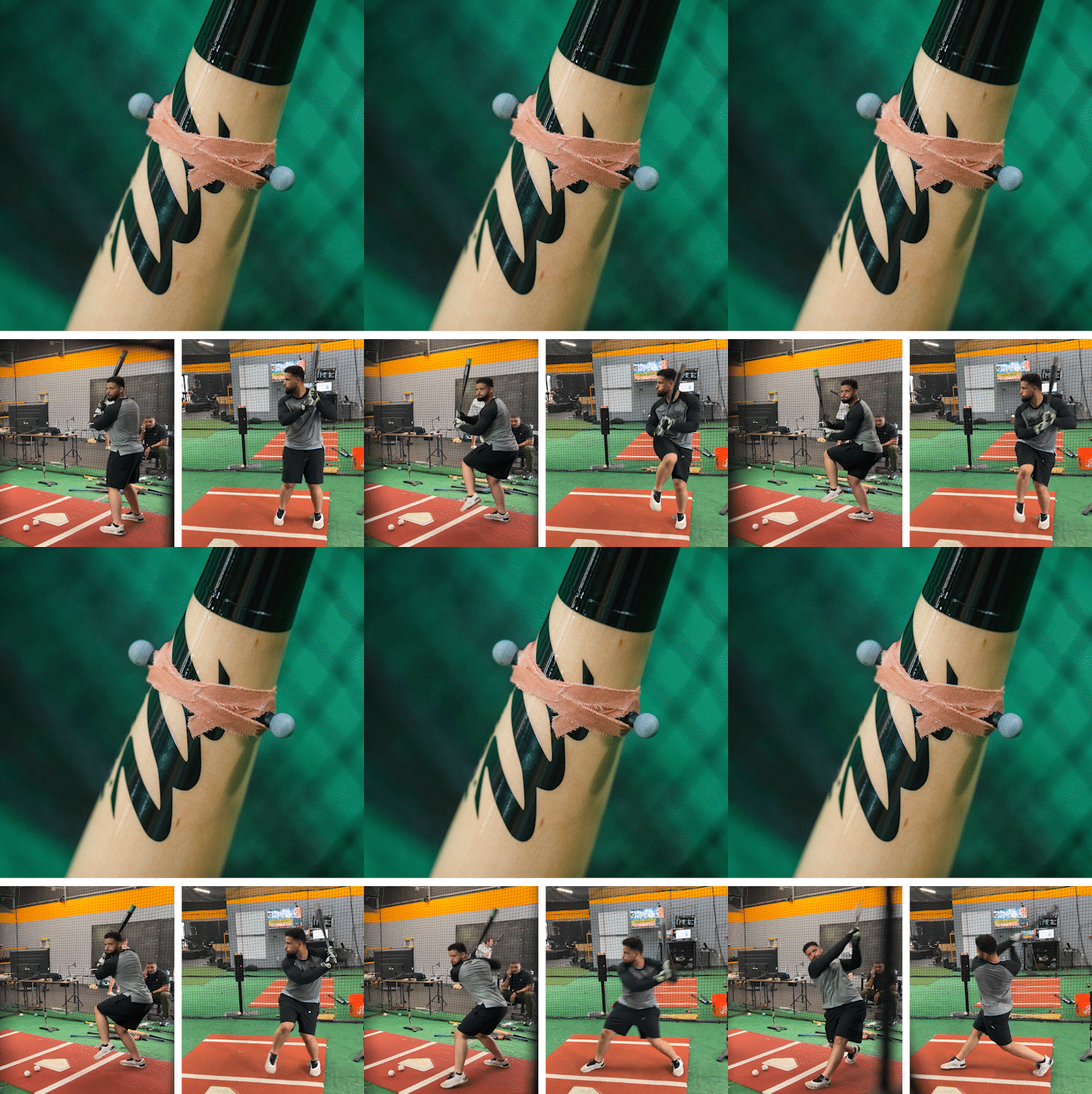
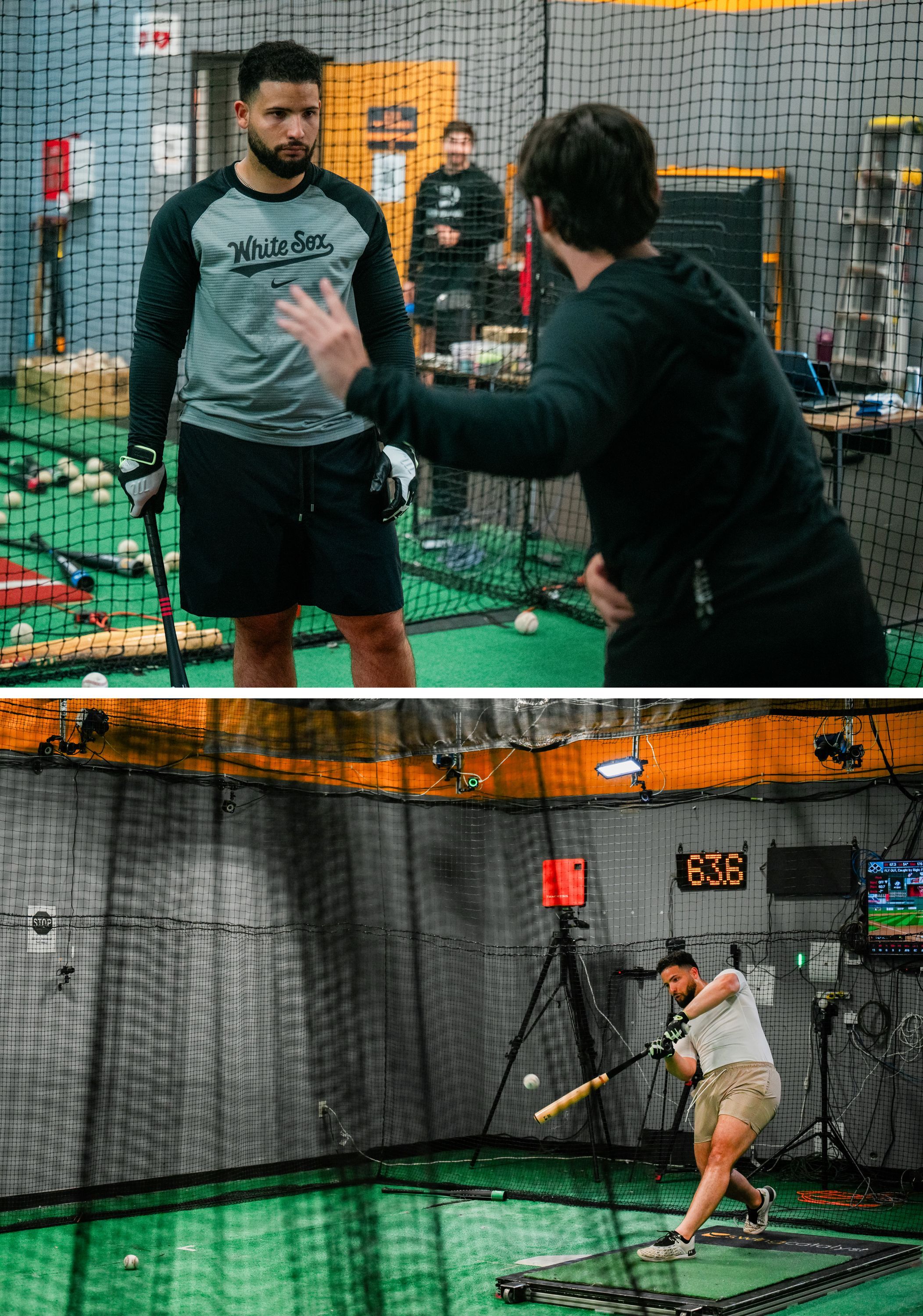
Edgar Quero, catcher for the Chicago White Sox, is an example of this new generation of players. At 22 years old and in his second season in the Major Leagues, Quero undergoes rigorous training at Driveline. Equipped with sensors and high-speed cameras, he analyzes every movement of his swing. The objective: to increase his bat speed and optimize his launch angle to maximize his power.
Quero, a young switch-hitter with promising offensive potential, possesses an exceptional ability to stay in the strike zone and hit the ball with the sweet spot of the bat. However, his bat speed is slow and his launch angle is low, which limits his ability to generate power. That is why, competing for playing time with another promising young catcher, Kyle Teel, Quero moved to Driveline to undergo an intensive training program.
Driveline, operating in three states, established itself as a pioneer in the pitching revolution, utilizing advanced technology to help pitchers achieve unprecedented speeds and movements. Now, with the same rigor, Driveline focuses on hitters, using biomechanical data and innovative training techniques to shorten the gap between pitchers and hitters.
“It’s never been so hard to hit, and the people who work here have played a big role in that.”
Tanner Stokey, Driveline hitting director
The obsession with bat speed and launch angle, pillars of Driveline, has generated debate in the baseball world. Some criticize the pursuit of slugging, arguing that it has reduced batting averages and increased strikeout rates, diminishing the excitement of the game. However, the data suggests that the situation is more complex, as technology increasingly favors pitchers, who can drastically improve their pitches.
The average fastball velocity has steadily increased, rising from 91.3 mph in 2008 to 94.4 mph in 2025. Detailed scouting reports and Hawk-Eye data offer pitchers a clear view of how to attack hitters. In response, Driveline seeks to optimize bat speed and launch angle, using biomechanical data to maximize each player’s potential. The key lies in the correct application of these elements, supported by precise data and a well-defined strategy.Sensores adheridos al bate de Quero permiten al software rastrear su swing. Se recopilan datos para hacer recomendaciones de ajustes en el swing, con el fin de generar mayor velocidad y potencia.Driveline has nearly 100 former employees in Major League organizations, and many of them come from the hitting area. The Boston Red Sox employ a dozen of them, including Kyle Boddy, advisor to the front office and founder of the company about 15 years ago.
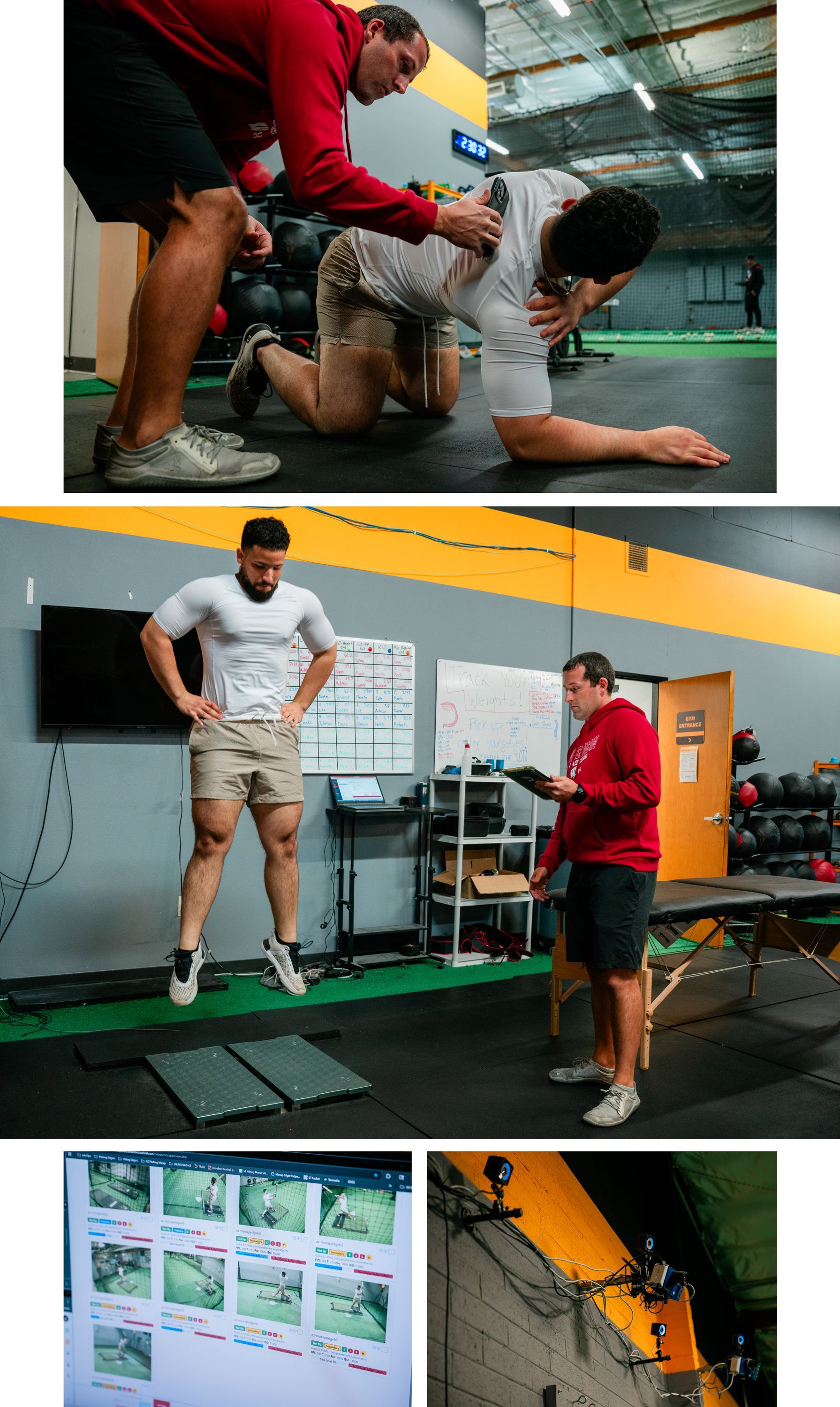
Young players are exposed to this information at an early age. Recently recruited minor league players are familiar with tools like HitTrax and Blast sensors, allowing them to adapt more quickly to data-driven training.Quero fue grabado y medido realizando una variedad de ejercicios y estiramientos para recopilar más información sobre su swing actual y potencial.In the Driveline weight room, a whiteboard displays the rankings of professional, collegiate, and high school athletes in various measurements of the dual force plate system. Corbin Carroll, outfielder for the Arizona Diamondbacks, stands out with the highest squat jump, at 61.2 centimeters. Jo Adell, outfielder for the Los Angeles Angels, ranks third with a countermovement jump of 60.1 centimeters.
On January 20, Quero began his session with range of motion tests and jumps on force plates. These tests measure the force generated and its speed, providing data to calculate the expected bat speed and pitching velocity. Inefficiencies in movement are detected in the batting cage, where Quero hits balls at 65 mph. Reflective markers track the trajectory of his bat, the Blast Motion sensor records the speed and attack angle, the force plates measure his power, and Edgertronic cameras analyze his swing mechanics at high speed.
In his rookie season, Quero hit .268/.333/.356 with five home runs in 403 plate appearances. His batting average and bat speed ranked among the bottom 7% of the league. Quero is looking to improve his performance, especially in terms of his bat speed and launch angle.
Quero, born in Cuba, arrived in the United States after passing through Haiti and the Dominican Republic, where he trained until 2021, when he signed with the Angels. The White Sox emphasized the need to improve his pitch framing and the speed of his bat, which sparked his interest in data analysis.
“This is a different baseball, and it’s part of the game right now. You have to learn it.”
Edgar Quero
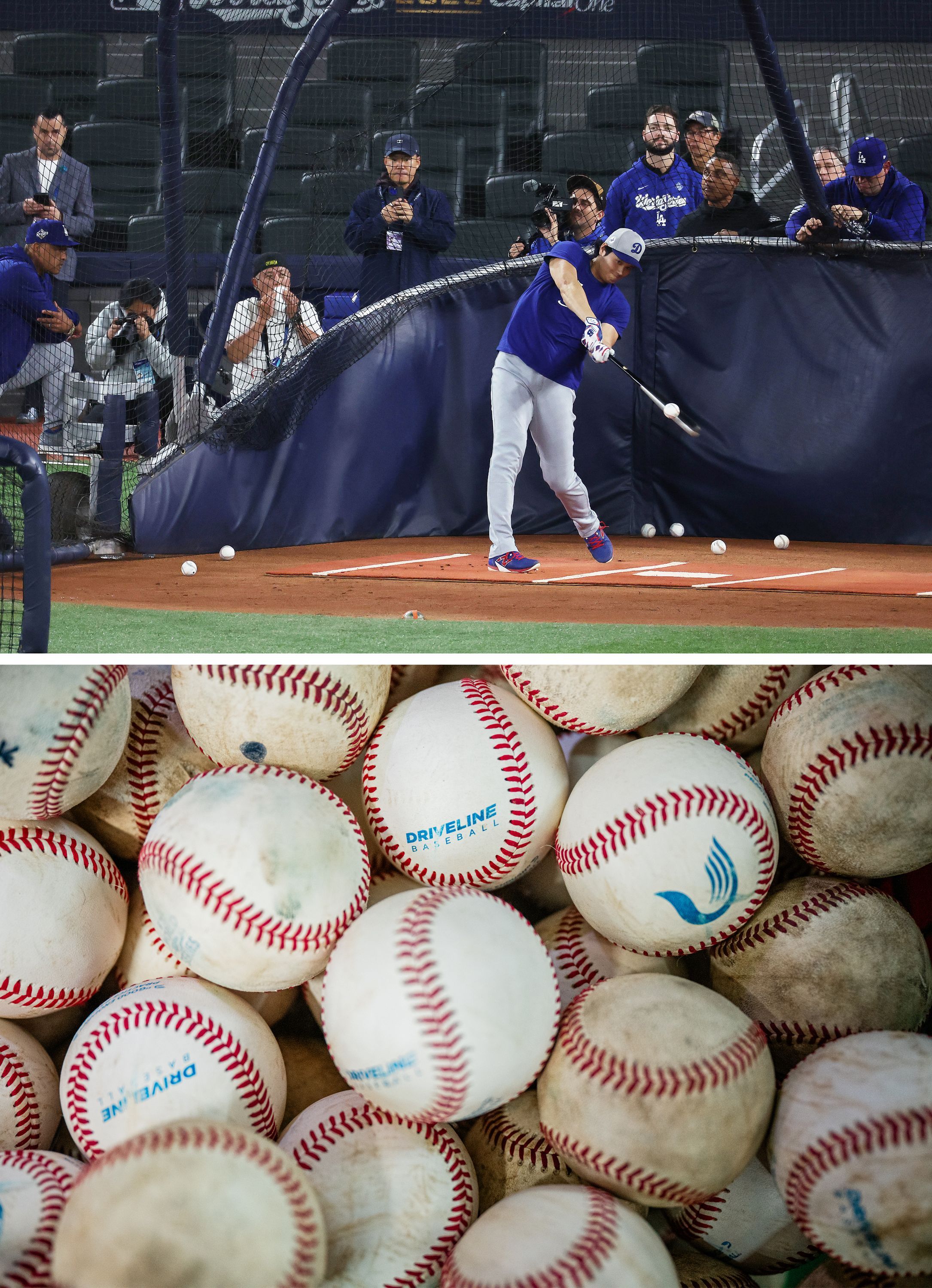
Driveline recibió atención temprana después de trabajar con Shohei Ohtani (entonces miembro de los Angelinos de Los Ángeles).Driveline’s hitting program took off thanks to Ohtani. In May 2018, Stokey joined Driveline, whose hitting division had emerged a year and a half earlier. Driveline’s perception changed in the fall of 2020, when Ohtani, then with the Angels, sought to improve his performance. Ohtani needed a new foundation. His hip rotation was late, his front foot slipped, and his bat was too vertical on contact. But his bat speed was elite and his power, prodigious.
In a month, Ohtani broke three Driveline speed training bats. In the end, Stokey expected Ohtani to hit 30 home runs, and Ohtani achieved 33 before the All-Star break. Ohtani’s success generated curiosity in the baseball world.
“The news spreads fast in the game,” said Stokey, who estimates that up to 40 major league hitters have used the facilities to some extent. “It was obvious that we weren’t allowed to talk about it. We didn’t publish anything. But within the game, people knew he was here. That was one of the important things that started to drive it.”
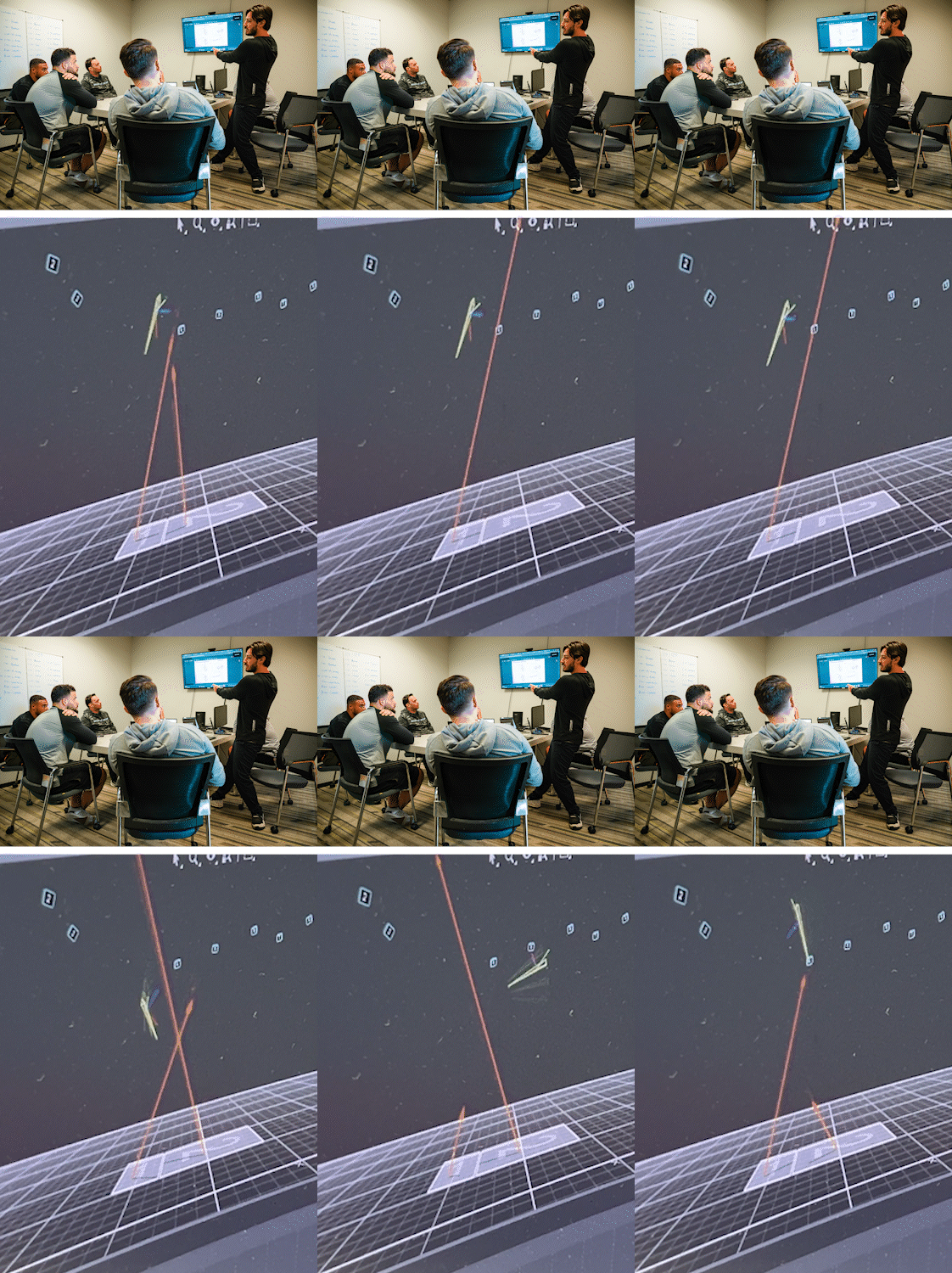
Five seasons later, Quero reunited with Stokey and other Driveline experts. All aspects of Quero’s swing were analyzed, and one number stood out: 67.5 mph, the average bat speed last season, ranking 217th out of 226 qualified players. Driveline focuses on maximizing bat speed, as each additional mph translates to 1.2 mph of exit velocity and 7 feet of additional distance for the ball.Después de registrar datos y estudiar el movimiento de Quero, el equipo de Driveline compiló análisis sobre las mejores formas de mejorar su swing y su poder a través de pequeños ajustes.Quero was shown examples of players with similar contact profiles, such as Eddie Rosario, Alex Verdugo, and Bryson Stott, and their realistic potential: Josh Naylor, Jazz Chisholm Jr., and Addison Barger. He was explained that with just 2 mph more bat speed, he could aspire to be a more powerful hitter. To achieve this, a multifaceted approach was implemented.
Kozlowski’s analysis revealed that the power generated by Quero in countermovement jumps and squats was below the major league average. Work is needed on lower body explosiveness. Another problem was the point of contact, which occurred in the center of the plate. Quero needs to hit the ball further out in front. He was shown a chart of comparable players based on their batting profile from last year, showing more contact-oriented hitters like Eddie Rosario, Alex Verdugo, and Bryson Stott. Then, he was shown his realistic potential.
His launch angle on the hardest balls was below the league average. Quero’s swing tends to go too much upwards, causing him to hit the top of the ball and send it to the ground. The solution lies in biomechanical data. Charts were analyzed showing the angle and rotational speed of Quero’s pelvis and torso, as well as the angle of his swing planes, comparing them to ideal trajectories. It was identified that his front hip opens too early, leading to a negative attack angle.
The launch angle, the meeting point between the bat and the ball, is not a consistent indicator of success. An ideal angle is between 5 and 20 degrees. Quero does not produce the bat speed necessary to generate power, so it is crucial that he elevates the ball. He only achieved that in 7.8% of his hits.Jacob Hirsh, coordinador de bateo de Driveline, trabajó con Quero para centrarse en las áreas de crecimiento que identificaron durante la sesión de dos días en Scottsdale, Arizona.The implementation began by placing Quero in an unusual situation: hitting breaking pitches from the same side, a type of pitch he never faces as a switch hitter. The goal was to force him to keep his hips closed. Quero used training bats of different weights and lengths, and performed unconventional exercises. Another flaw was noted: Quero, accustomed to hitting the ball deep in the batter’s box, didn’t know how to react when he hit it further forward. He was advised to practice to adjust his body and be more effective in front contact.
Driveline opened its Scottsdale facility in 2022 and another in Tampa two years later, giving the company satellite locations in the two states where players spend most of their offseason. A two-day evaluation like Quero’s costs $7,500 for professionals. A full offseason program costs $15,000. The full-year package, which includes advanced scouting reports, comes to $20,000.
Driveline prefers that hitters and pitchers begin working with them at the start of their offseason, considering it the ideal time for evaluation. Quero arrived three weeks before the start of spring training. The hope is that he implements some of the exercise work, sees results during his second season, and returns this fall, at which point, the staff believes, more significant gains can be made.
“I was happy to be here to learn a little more about my body. I think it will help me during the season, trying to increase my exit velocity, bat speed and launch angle a little better.”