


Australia and India: An Epic Duel in Times of Uncertainty
In a year marked by the Covid-19 pandemic, Australia and India prepare to face each other on the same stage where they began their last encounter in 2018: the Adelaide Oval. The familiar sight of the scoreboard and the imposing Moreton Bay trees at the north end of the field provide a sense of continuity, an essential element in Test cricket. This will be the backdrop for the teams led by Tim Paine and Virat Kohli in the first day/night Test for India away from home. This clash between two of cricket’s most powerful nations promises to be even more special than any other encounter in the last 20 years. The series itself is an achievement, considering the circumstances. Despite the significant financial forces driving India and Australia to contest at least 12 test series since 1999, everyone involved and the fans have experienced moments of uncertainty about the series taking place this year. In the difficult months of March, April and May, when the world of sport almost completely stopped, the possibility that the series would not take place was a real concern. More recently, the challenges focused on overcoming the obstacles to organize the series, despite the goodwill between Cricket Australia and the BCCI. Faced with the challenges faced by Cricket Australia, including conflicts with state associations and rights broadcasters, the organization was grateful that the administrators and players of India did not raise significant objections about the tour. The main obstacles for CA’s interim CEO, Nick Hockley, and chairman Earl Eddings, focused on finding an entry point for the charter plane carrying the visiting team. Initial plans to land in Perth were modified, considering alternatives in Adelaide and Brisbane, before Sydney, Canberra, the New South Wales government and the SCG Trust finally took the lead. Tensions reached their peak during an extensive, and ultimately unsuccessful, negotiation with the Queensland government. Even after the arrival of the Indians, there was a possibility that the series would be disrupted by a Covid outbreak in Adelaide. For a long time, the Adelaide Oval was scheduled to host at least one and possibly two test matches, given the prolonged quarantine Melbourne faced for much of the year, which generated uncertainty about Boxing Day until October. But the outbreak that forced a brief and strict lockdown in South Australia led to changes in plans, considering starting the test series with a day/night Test at the MCG and then continuing with a more traditional game from December 26.These possible alterations were present in the mind of the Adelaide Oval curator, Damian Hough, who, although accustomed to dealing with rock concerts and changes in football matches, prepared a pitch for a test match with a Christmas parade as a prelude. “One thing we have learned with Covid is to live more in the present,” said Hough. “We like to plan months in advance. We still had plans, but we had to live in the moment a little more,” he added. “[A U2 concert last year] was a much bigger challenge than what we are going through this year. I never thought I would see a Christmas parade at the Adelaide Oval, so it’s a unique year”.
“We are fortunate to be able to give Australia training in the center of the court on Friday, Saturday and Sunday, so that was our only preparation, and it seemed to go very well, the comments were positive. We have the recipe that seems to work… we are sticking to the game plan.” More than anything else, those sessions in the center of the court are shaping up as an invaluable competitive advantage for the members of the Australian team who arrived before those who played for Australia A against the Indians on a different surface at the SCG, something that Paine did not hesitate to affirm.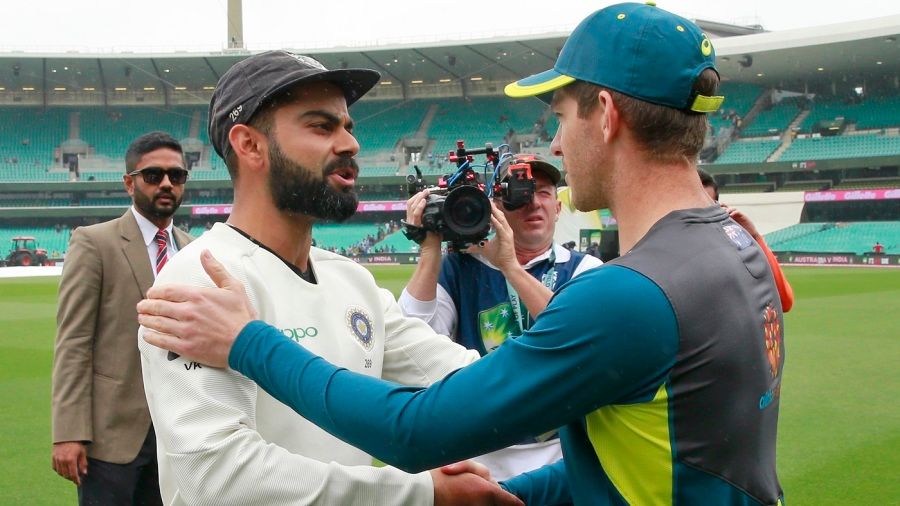
Paine added: “But we certainly have plans implemented that have worked well against him in the past; hopefully they’ll work early enough this week, but if not, yes, we have a couple of different plans. The good thing about our attack is that they’re all different, we also have Nathan Lyon and now we add Greeny, we have some different angles, some different speeds and obviously Nathan’s spin as well as Marnus’, so we have a lot of different options to throw at him if he were to get in and get set.” It’s refreshing that tactical discussions and plans are focused on the eve of a test series, rather than on Covid protocols, border restrictions, and the financial impacts of the year to date. Paine, who cherishes his test career more than most after being one or two phone calls away from retiring from cricket altogether in 2017, had no notion of “bubble fatigue” at this point, when asked if such considerations might shorten what remains of his time at the top of the game. “Absolutely not. I love it, to be honest,” Paine said. “I don’t think this hub has been as strict as maybe the IPL or England’s. I’m sleeping really well; my kids are at home, which is good in a way, but I certainly miss them. But I sleep better here and feel fresher here than at home, so life in the hub might make me play longer, if anything.” The events of 2020 have ensured that this latest chapter is as vivid as any sporting competition, when so many around the world remain confined by a pandemic.“Everyone has big plans to get the best players out, don’t they?, but that’s why they’re the best, they can adapt, they can change with what you’re doing, and Virat is certainly one of the best players, if not the best player in the world,” Paine said. “There will be a time in this, well, there’s really only one test, so let’s hope not, but when you play against players as good as Virat, sometimes they get away from you, that’s the game.”
Tim Paine


